All Saints — All Souls, What's the difference?
All Saints' Day and All Souls' Day: Why the Difference Matters
As November begins, Catholics celebrate two observances that often get lumped together: All Saints' Day on November 1 and All Souls' Day on November 2. Because both focus on those who have died, many people assume they are essentially the same celebration. In reality, each day highlights a different aspect of the Church's understanding of life after death, and together they reveal something beautiful about what Catholics call the Communion of Saints.
All Saints' Day
All Saints' Day is a celebration. It honors those who have already reached the fullness of eternal life in heaven. When most people hear the word "saint," they think of familiar names such as St. Francis of Assisi, St. Teresa of Calcutta, or St. John Paul II. These saints are certainly included, but the feast is much broader than that. The Church also celebrates the countless holy men and women whose names may never be known publicly. They may have been faithful parents, devoted spouses, generous neighbors, dedicated teachers, or ordinary believers who quietly followed Christ throughout their lives. All Saints' Day reminds us that holiness is not reserved for a select few. It is the calling of every Christian.
Because it is a feast of victory, All Saints' Day carries a joyful tone. The saints have completed the race. They have passed through the trials of earthly life and now stand in the presence of God. The Church celebrates what God's grace accomplished in them and points to their lives as examples for us to follow.
All Souls' Day
All Souls' Day, however, has a different focus. Instead of celebrating those already in heaven, the Church turns its attention to all the faithful departed and prays for them. Catholics believe that many souls die in friendship with God but may still need purification before entering fully into God's presence. For this reason, Catholics offer prayers, attend Mass, visit cemeteries, and remember deceased loved ones. The day is marked by remembrance, but not by despair. It is rooted in hope and trust in God's mercy.
The distinction between the two days is actually quite simple. On All Saints' Day, we celebrate those who have already reached heaven. On All Souls' Day, we pray for those who are still on the journey toward heaven. One day is a feast of rejoicing; the other is a day of intercession. Yet separating the two completely would miss the deeper truth the Church is trying to teach.
Communion of Saints
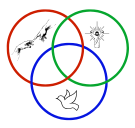
The two celebrations stand side by side because they are connected through the Communion of Saints.
Many Catholics recite this phrase in the Apostles' Creed without thinking much about it, but it is one of the most powerful beliefs of our faith. The Communion of Saints means that all who belong to Christ remain united to one another. Death does not break that bond. The Church is not divided into separate groups that have no relationship with one another. Rather, it is one family joined together in Christ.
The saints in heaven remain connected to us. They are not distant historical figures who simply lived long ago. They are alive in Christ and continue to pray for the Church. In the same way that we might ask a friend or family member to pray for us, Catholics ask the saints to intercede for us.
Likewise, those who have died and are being purified are not forgotten members of God's family. We continue to pray for them because love does not end at death. Just as we pray for one another during earthly life, we continue to pray for those who have gone before us.
At the same time, those of us still living on earth remain part of this same communion. We are connected to the saints in heaven and to the faithful departed through Christ. The Church often speaks of believers on earth, the souls being purified, and the saints in heaven, but these are not three separate churches. They are one Church, united by the life of Christ Himself.
This understanding transforms how Catholics view death. In a culture that often sees death as a final separation, the Church proclaims that the bonds created in Christ are stronger than the grave. We do not simply remember the saints; we remain united with them. We do not merely recall our deceased loved ones; we continue to pray for them and entrust them to God's mercy. The relationship changes, but it does not disappear.
That is why All Saints' Day and All Souls' Day belong together. One reminds us of our destination. The other reminds us of our responsibility to pray. Together they teach that the Church extends beyond the walls of any parish and beyond the limits of earthly life. They remind us that we are part of a family that spans heaven and earth, a family bound together by faith, hope, and love.
As Catholics gather to celebrate the saints and pray for the faithful departed, they proclaim a truth that stands at the heart of the Gospel: Christ has conquered death. Because of Him, those who belong to Him remain united forever.
For more Catholic faith reminders, follow us on your favorite platform.
© 2026 Fix the Foundation Coaching. All rights reserved.
 |  |  |